


As India prepares to host the first Global AI Summit in the Global South, I’ve attempted to imagine the broad contours of what the Hon’ble Prime Minister could convey to world leaders, drawing from India’s Digital Public Infrastructure success, our $400 million commitment at the Paris AI Summit 2025, and the “Sabka Saath, Sabka Vikas” philosophy.
A Note on Ethics:
This is entirely speculative, not a prediction, nor a claim of insider access. I have no official association with the PMO. This is a personal policy exercise, shared to spark dialogue on global AI governance.
What the Draft Envisions:
• AI safety and ethics initiatives
• A $1 billion AI Commons for developing nations
• Questions around equitable governance and worker protection
• India’s DPI model as a blueprint for inclusive AI
As AI advances at unprecedented speed, the world needs leadership that balances innovation with inclusion, and ambition with ethics. Too often, global AI conversations remain distant from the lived realities of the Global South. This Summit offers a rare opportunity to re-center those voices.
Read the full draft speech below.
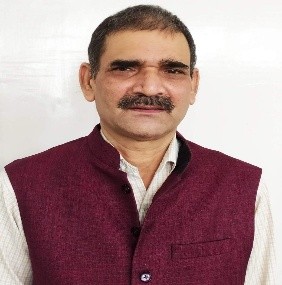
SP Tiwari
Speechwriter
bhartiyasahitya@gmail.com
What PM Modi May Say at the Global AI Impact Summit 2026 — My Perspective
Global AI Impact Summit, New Delhi 2026
Address by the Prime Minister of India
Namaste!
Your Excellencies, my dear friends from across the world,
On behalf of 140 crore Indians, I welcome you to New Delhi for the Global AI Impact Summit 2026.
You know, my dear friends, when people ask me about AI, I tell them a simple story. Last month, I met a doctor in a remote tribal area of Chhattisgarh. He used an AI tool on his mobile phone to detect tuberculosis in a patient within minutes—something that would have taken weeks and cost that poor family everything they had. That patient is alive today because of AI.
This is what AI means to India. Not fancy robots. Not science fiction. Real solutions for real people.
And today, I’m pleased to announce that this AI model, developed by Indian startups with our IndiaAI Mission, will be made open-source for the world. Free for any nation to use, adapt, and deploy.
Because AI must serve humanity, not profit alone.
My dear friends,
Just one year ago, I had the honour of co-chairing the Paris AI Action Summit with my friend President Macron. Fifty-eight nations came together. We signed a historic statement. We made commitments.
But you know, my friends, Bharat doesn’t just make commitments—we deliver on them.
Today, as we host the first Global AI Summit in the Global South, we move from words to action. From promises to proof. From dialogue to delivery.
This is not just another conference. This is history in the making.
The Bharat AI Story
My dear friends, when I travel the world, people ask me—”Modi ji, how is India becoming an AI power?”
I tell them—our strength is our diversity. We have 22 official languages, hundreds of dialects, extreme diversity in climate, culture, and challenges. If AI can work for India’s complexity, it can work anywhere.
Let me share what we’ve built in AI specifically:
IndiaAI Mission – ₹10,371 crore investment, the largest government AI program in the Global South. We’re deploying 38,000 GPUs, building India’s first sovereign AI compute infrastructure.
Bhashini – Our multilingual AI platform now supports 12 Indian languages with 11 more coming soon. It’s not just translation—it’s voice recognition, text-to-speech, and AI models that understand cultural context. Why? Because a farmer should be able to ask crop advice in Marathi, not struggle with English.
AI-powered UPI – Our Unified Payments Interface processes 13 billion transactions monthly using AI for fraud detection, risk management, and instant settlements. We’re sharing this model with 100+ countries. No licensing fee. No strings attached.
Saksham Anganwadi AI – In 1.4 million childcare centers, AI monitors nutrition, predicts malnutrition, and helps workers provide better care. Real-time, in vernacular languages, on basic smartphones.
Kisan AI – Helping 10 crore farmers with AI-based weather prediction, pest detection, crop advisory, and market price forecasting. This has increased farmer incomes by 15-20% in pilot districts.
My dear friends, we have 111 unicorns, 50+ of them in AI and deep tech. We produce 1.5 million engineers yearly. Our talent builds Silicon Valley, but increasingly, they’re choosing to build in India, for India, and for the world.
From Paris to New Delhi—Delivering on Our Word
In Paris, we made three major commitments. Today, I stand before you to report—Mission Accomplished.
First: We offered computing power to the world. Today, over 30,000 GPUs are accessible to nations at prices they can afford. No nation should be left behind because of lack of compute power.
Second: We launched Bhashini—our voice-based AI platform. Today, it reaches billions in their mother tongues. A farmer in Bihar can access AI in Bhojpuri. A student in Kerala can learn in Malayalam. A mother in Nagaland can get healthcare advice in her local language. This is AI for all, not AI for some.
Third: We co-founded Current AI with $400 million, creating AI public goods—datasets, tools, infrastructure that belong to all of humanity. Because my dear friends, the sun doesn’t shine for one nation alone. Knowledge shouldn’t either.
India’s AI Regulation Framework
My dear friends, let me share something important. Many ask—”Modi ji, more regulation will slow down innovation.”
I disagree. Smart regulation accelerates trust, and trust accelerates adoption.
Last year, India enacted the Digital Personal Data Protection Act. This year, we’re finalizing the AI Reliability and Safety Framework based on four pillars:
1. Risk-Based Regulation: Not all AI is the same. AI that diagnoses cancer needs different safeguards than AI that recommends movies. We categorize AI systems by risk level and regulate accordingly.
2. Transparency by Design: High-risk AI must explain its decisions. If AI denies someone a loan, they have the right to know why. If AI recommends medical treatment, doctors must understand the reasoning.
3. Human Oversight for Critical Decisions: AI can assist. AI can recommend. But for life-changing decisions—healthcare, criminal justice, financial inclusion—a human must be accountable.
4. Local Data, Sovereign AI: India’s data about Indians should primarily benefit Indians. We support cross-border data flows, but with safeguards. We encourage AI development, but with data localization for sensitive sectors.
Is this perfect? No. Will we adjust as we learn? Absolutely. But doing something imperfectly is better than doing nothing perfectly.
And my dear friends, we’re sharing this framework openly. Adapt it. Improve it. Make it work for your context. That’s how we learn together.
The AI Moment—Opportunity and Responsibility
My dear friends, I want to be very honest with you today.
AI is the most powerful technology humanity has created. More powerful than nuclear energy. More transformative than the internet.
It can cure cancer. It can predict cyclones and save millions. It can teach every child on earth. It can solve climate change. The possibilities are endless.
But…
Without guardrails, AI can take away jobs overnight. It can invade privacy at scale. It can spread misinformation faster than truth. It can create deepfakes that destroy reputations. It can make autonomous weapons that kill without human decision. It can concentrate power in hands of few companies and few nations.
And most dangerous—it can make decisions we don’t understand, can’t explain, and cannot challenge.
So I ask you today—will we control AI, or will AI control us?
This is not philosophy. This is practical reality we must address.
That’s why India has established the AI Safety Institute of India (AISII), working with similar institutes from UK, US, Singapore, and Japan. We’re testing AI models for safety, building red-teaming capabilities, and creating safety benchmarks for deployment.
Today, I announce India will contribute $100 million over three years to establish a Global AI Safety Research Network—open to all nations, focused on making AI systems safe, interpretable, and aligned with human values.
Because my dear friends, speed without safety is not progress—it’s recklessness.
Five Pillars for People-First AI
In Paris, we built the foundation. Today in New Delhi, we build the structure.
Let me share with you Bharat’s approach—tested not in boardrooms but in the lives of 140 crore people:
First Pillar: AI Must Reach the Last Mile
My dear friends, in Bharat, we have a mantra—Sabka Saath, Sabka Vikas, Sabka Vishwas, Sabka Prayas—Together with all, development for all, trust of all, efforts by all.
This is not just a slogan. This is our lived reality.
When we built UPI, we didn’t build it for cities alone. Today, a vegetable seller in a remote village accepts digital payments. When we launched Jan Dhan, we opened 500 million bank accounts—the world’s largest financial inclusion program.
AI must follow the same path. From the mountains of Himachal to the islands of Andaman, from the deserts of Rajasthan to the villages of Northeast—AI must reach every Indian, every human being.
Second Pillar: Human-Centric, Not Machine-Centric
My dear friends, I often say—technology should be our slave, not our master.
In Bharat, we use technology to augment human capability, not replace human dignity. Our 9 million self-help groups—mostly women—use AI tools to grow their businesses. Our farmers use AI to predict weather and crop diseases. Our doctors use AI to diagnose patients in remote areas.
But the decision-maker is always human. The responsibility is always human. The accountability is always human.
This is the Bharatiya way, and this must be the global way.
Third Pillar: Global Cooperation, Not Global Competition
My dear friends, the biggest problems facing humanity today don’t respect borders. Climate change doesn’t need a visa. Pandemics don’t stop at immigration. And AI certainly won’t wait for diplomatic negotiations.
We need reformed multilateralism—where decisions are not dictated by the powerful but shaped by all, especially by the voices of the Global South.
In Paris, we established working groups co-chaired by Global North and Global South. Today, I’m proud to announce these have evolved into our Seven Chakras—seven energy centers for AI governance:
- AI Commons – Making AI a global public good
- Trusted AI – Safety, ethics, accountability
- Compute for All – Shared infrastructure
- Sector Solutions – Healthcare, agriculture, education, climate
- Skills Revolution – Through our Yuva AI program
- Green AI – Sustainable computing
- Economic Empowerment – Supporting MSMEs, startups, workers
Each Chakra will deliver concrete results. Not just reports. Deliverables.
Fourth Pillar: Open Innovation with Sovereign Choices
My dear friends, we believe in openness. We have shared our Digital Public Infrastructure blueprint with 100 nations. Free of cost. No strings attached.
But openness doesn’t mean surrender. Atmanirbhar Bharat—Self-reliant India—is not about isolation. It’s about having choices. It’s about not being dependent on any one nation or company for our critical needs.
Every nation must have the right to build its own AI capabilities. Every nation must have access to foundational technologies. Every nation must be able to protect its data, its people, its sovereignty.
This is not nationalism. This is common sense.
Fifth Pillar: Preparing for Disruption, Protecting Our People
My dear friends, let me be honest. AI will disrupt jobs. This is reality. We cannot hide from this truth.
But you know what? The Industrial Revolution also disrupted jobs. The Internet also disrupted jobs. Yet humanity moved forward.
The question is—will we let people suffer during transition, or will we support them?
Bharat’s answer is clear: We will walk with our people.
Through re-skilling programs. Through social safety nets. Through new livelihood opportunities. Through education reform.
Nobody will be left behind. This is my commitment to my people. And this should be our collective commitment to all of humanity.
A New Global Framework—From Talk to Action
My dear friends, enough of statements. Enough of declarations. It’s time for action.
Today, I’m pleased to announce several concrete initiatives:
1. The Global AI Commons Platform India will host the world’s first Global AI Commons—a shared repository of:
- Open-source AI models in 100+ languages
- Labeled datasets for agriculture, healthcare, education, climate
- AI tools for developing nations, free to use and modify
- Computing credits worth $500 million for researchers from Global South
2. International AI Safety & Ethics Council Not another talking shop. A working body with:
- Equal representation from each region
- Power to set binding safety standards
- Quarterly public reporting on AI risks
- Co-chaired by India and a rotating Global South nation
3. AI Skilling Initiative – “AI for 10 Million” By 2030, train 10 million AI professionals through:
- 1,000 AI Excellence Centers across universities worldwide
- Free AI certification courses in 50 languages via SWAYAM platform
- 100,000 AI scholarships for students from least developed countries
4. Current AI 2.0 Expanding our $400 million fund to $1 billion for:
- Building sovereign AI infrastructure in developing nations
- Creating industry-specific AI models (agriculture, healthcare, education)
- Supporting AI startups solving local problems with global impact
5. The New Delhi Declaration on AI I invite all nations to co-sign this declaration committing to:
- AI systems must be explainable and auditable
- Data sovereignty rights for all nations
- Mandatory AI impact assessments for high-risk applications
- Ban on fully autonomous weapons systems
- Protect workers during AI transition with reskilling and social support
And my dear friends, every commitment comes with a monitoring mechanism. Every six months, we report progress. No commitments without accountability.
And my dear friends, over the next five days, please visit our AI Impact Expo at Pragati Maidan.
Don’t just see presentations. See live AI in action:
- AI Diagnostic Hub: Watch AI detect tuberculosis, diabetic retinopathy, and cardiac abnormalities in real-time, on devices costing less than $100
- Krishi AI Lab: See AI drones surveying fields, predicting yields, detecting pests, and providing crop advisories in 12 languages
- Climate AI Command Center: AI models predicting floods 7 days in advance, optimizing renewable energy grids, and monitoring forest cover in real-time
- Education AI Classroom: Personalized learning where AI adapts to each student’s pace, language, and learning style
- Governance AI Solutions: AI tools for efficient public service delivery, reducing corruption, and improving citizen services
- Assistive AI Technologies: AI helping specially-abled people—sign language translation, navigation assistance, voice-enabled everything
This is not future. This is present. This is deployed. This is impacting lives TODAY.
And every technology you see here is available for any nation to adopt, adapt, and deploy. Knowledge sharing is in our DNA.
The Civilizational Choice
My dear friends, Bharat is called Vishwa Guru—the teacher of the world—not because we conquered nations, but because we shared knowledge.
We gave the world zero. We gave the world yoga. We gave the world Ayurveda. We gave the world the concept of Vasudhaiva Kutumbakam—the world is one family.
Today, we want to give the world a new model of AI—an AI that serves humanity, that respects diversity, that empowers the marginalized, that protects privacy, that enhances democracy, that solves real problems of real people.
Some people say this is too ambitious. Some say this is impossible.
But you know what? Ten years ago, people said the same thing about Digital India. Today, the world studies our UPI model. The world wants to learn from our Aadhaar. The world is inspired by our vaccine democracy.
When Bharat commits, Bharat delivers.
The Road Ahead
My dear friends, we stand at a turning point in human history.
Previous technology revolutions happened over decades. AI is happening in years, months, even weeks. GPT-3 to GPT-4 took 18 months. Imagine what the next 18 months will bring.
The speed is breathtaking. But speed without direction is just motion, not progress.
I have a five-year-old grandson. When he grows up, he’ll live in a world shaped by the AI systems we build today.
Will AI tutors teach him better than any human teacher could? Or will they manipulate his thoughts?
Will AI doctors keep him healthy? Or will they deny him treatment based on biased data?
Will AI create opportunities for him? Or close doors because of where he was born?
These questions aren’t for him to answer. They’re for us to answer. Today.
The choice is clear:
Path One: A few companies control AI. A few nations dominate. The Global South becomes digital colonies. The poor become data sources for the rich. Jobs disappear faster than new ones emerge. AI amplifies every existing inequality.
Path Two: AI becomes a global public good. Every nation builds AI capacity. Knowledge flows freely. Benefits are shared. Workers are protected. Privacy is sacred. AI solves humanity’s greatest challenges—hunger, disease, climate change, conflict.
I choose Path Two. India chooses Path Two.
And I believe—looking at this room, seeing leaders from 120 nations—the world chooses Path Two.
But choosing is not enough. We must build it. Together.
India—no, Bharat—stands ready.
Ready to share our AI models, our compute infrastructure, our experience. Ready to learn from yours. Ready to invest $1 billion in global AI commons. Ready to train 10 million AI professionals worldwide. Ready to co-chair working groups. Ready to build together.
But I challenge each of you today:
Don’t just sign declarations. Make commitments. Put money where your words are. Open your AI research. Share your datasets. Train people from other nations. Build inclusive AI supply chains.
And six months from now, when we meet again, come prepared to show what you delivered, not what you promised.
Because the world is watching. History is watching. Our children are watching.
Let me end with a thought from our ancient wisdom:
“Tamaso ma jyotir gamaya” — From darkness, lead us to light.
AI can be that light. Not for some. For everyone.
Not sometime. Starting now.
Not somewhere. Everywhere.
Together, my dear friends, let us ensure that the AI revolution becomes humanity’s greatest achievement, not its greatest regret.
Jai Hind! Jai Bharat!
Thank you. Dhanyavaad. Bahut Bahut Dhanyavaad.
Leave a Reply